
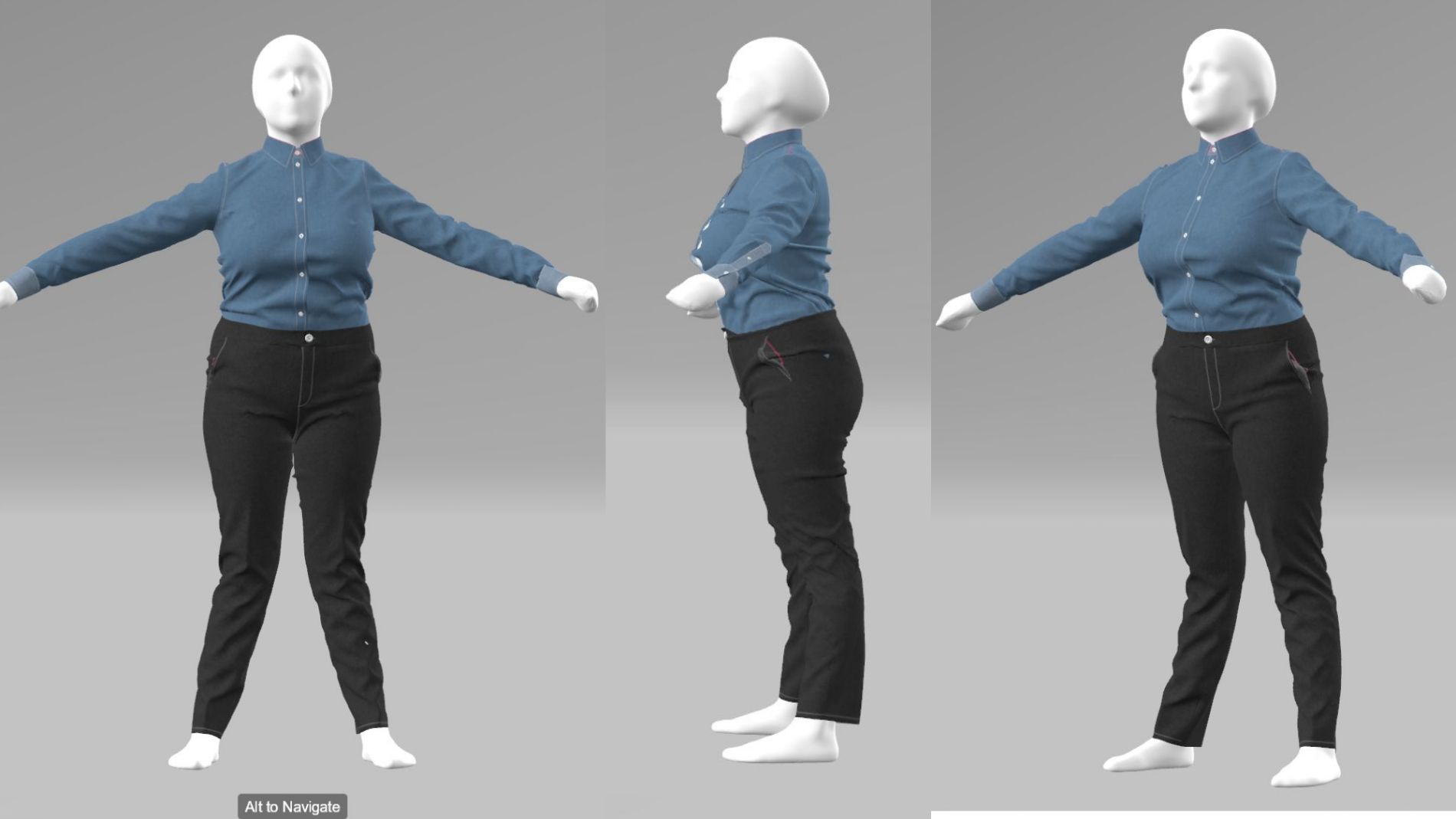
3D body scanning has traditionally been focused on static digital representation of the human body for measurement, morphology analysis, and visualization.
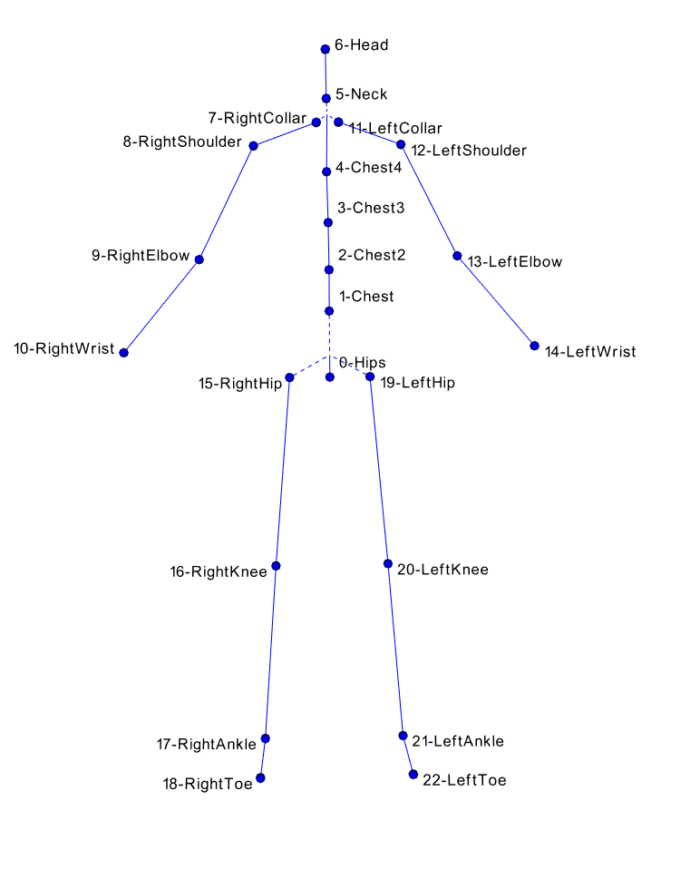
With the latest update to 3D Avatar Body, the platform evolves into a new category of solution, the generation of rigged avatars powered by an FBX skeleton system.
This update transforms a scanned body into a production-ready digital asset, enabling animation, simulation, and integration across professional 3D pipelines used in:
- fashion,
- gaming,
- healthcare,
- and immersive environments.
What’s new in 3D Avatar Body?
The key innovation in this release is the introduction of rigged avatars exported in FBX format.
This enables avatars generated from body scans or images to move beyond static representation and become fully usable digital characters.
With this update, avatars can:
- adopt any pose,
- be animated in 3D environments,
- be integrated into professional pipelines,
- be used in simulation workflows,
- and serve as reusable digital assets across industries
This marks a fundamental shift in the product, from static body reconstruction to fully functional digital asset generation.
From body scan to animatable avatar
Until now, 3D Avatar Body focused on:
- Body measurement extraction,
- static 3D reconstruction,
- and morphological analysis of the human body
With the introduction of the new FBX skeleton feature, the avatar becomes:
A functional 3D digital character
- Fully poseable,
- animation-ready,
- compatible with standard 3D software,
- suitable for simulation and real-time environments,
- reusable across multiple production stages
The avatar is no longer a visual output. It becomes a production asset.
Why FBX skeleton integration matters
The inclusion of an FBX-based skeleton is essential for interoperability across the 3D industry.
FBX is one of the most widely adopted formats for exchanging animated 3D assets between tools while preserving rigging, hierarchy, and motion data.
This allows 3D Avatar Body avatars to be integrated into software packages as:
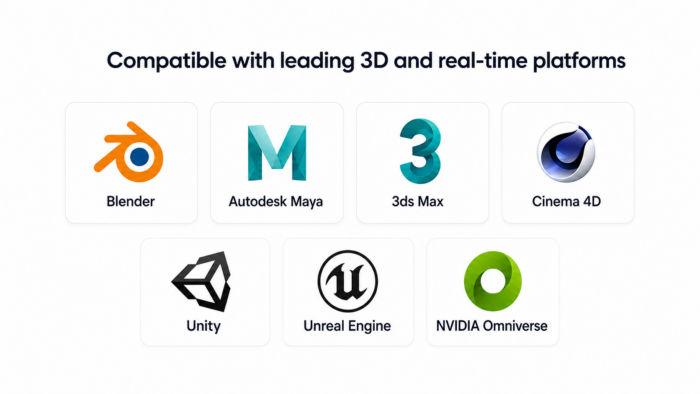
This compatibility ensures that avatars generated from scans can be directly used in:
- game development pipelines,
- VFX production workflows,
- digital fashion environments,
- simulation systems
- and VR and AR experiences
Industry impact of rigged avatars
The introduction of animatable avatars significantly expands the use cases of 3D Avatar Body across multiple industries.
Fashion and digital retail
In fashion, realism depends on movement and person-garment interaction.
Rigged avatars enable:
- Virtual try-on systems,
- garment simulation in motion,
- fit validation across poses,
- digital runway experiences,
- and product development before manufacturing
This allows brands to move from static fitting models to dynamic simulation-based fitting workflows.
Gaming and entertainment
In gaming and content creation, avatars generated from real users can become:
- Playable characters,
- digital twins,
- animation-ready assets,
- and personalized 3D identities
This connects real-world identity with interactive digital environments.
You might be interested in: Success story: how Paredes is shaping a new model of personalised safety footwear
Healthcare and wellness
In healthcare and wellness applications, motion representation becomes essential.
Use cases include:
- Rehabilitation visualization and tracking,
- posture and movement analysis,
- exercise simulation,
- and patient communication tools
The avatar becomes a visual support layer for understanding human movement.
Sports and performance
In sports and training environments, rigged avatars enable:
- Motion analysis,
- technique visualization,
- performance simulation,
- and injury prevention workflows
By combining realistic body shape with movement, training feedback becomes more visual and actionable.
Keep reading: 3D body Avatar real use case: 3D human body scanning in sports
VR, AR and immersive environments
In immersive systems, identity depends on movement and embodiment.
Rigged avatars improve:
- presence in virtual environments,
- user embodiment,
- interaction realism,
- and personalized digital identity
A unified 3D production workflow
The most important impact of this update is its support to the entire 3D production pipeline.
With FBX skeleton integration, a single avatar can move through:
- Body scanning
- Avatar generation
- Rigging with skeleton
- Export in FBX format
- Animation and simulation
- Deployment in real-world applications
This reduces fragmentation between tools and improves asset reuse across production stages.
From measurement to motion
This release represents a clear evolution of 3D Avatar Body.
From a system focused on capturing the human body, to a platform that enables activation of the body in digital environments.
The value of the avatar is now extended to:
- Movement,
- interaction,
- simulation,
- and integration into production workflows
The introduction of the FBX skeleton for rigged avatars in 3D Avatar Body marks a shift in how scanned human data is used across industries.
It transforms a body scan into a functional digital asset capable of being used in professional 3D environments, bridging the gap between physical capture and digital production.
The result is a new type of avatar, not static, but operational, interoperable and ready for real production use.