Why can the same clothing size fit perfectly in one brand but feel too tight or too loose in another?
A recent study by the Spanish consumer organisation OCU, conducted in collaboration with the Instituto de Biomecánica (IBV), reveals differences of up to 26% between garments labelled with the same size.
The findings highlight one of the fashion industry’s ongoing challenges, the lack of consistency in clothing sizes and the difficulty consumers face when choosing the right fit, particularly when shopping online.
Clothing size differences of up to 26% across brands
The study, published in September 2026, compared garments from 18 clothing brands, analysing four basic categories, women’s jeans, women’s T-shirts, men’s jeans and men’s shirts.
IBV was responsible for measuring the garments using a standardised protocol, allowing their actual dimensions to be compared under consistent conditions.
The results revealed significant differences between garments carrying the same size label:
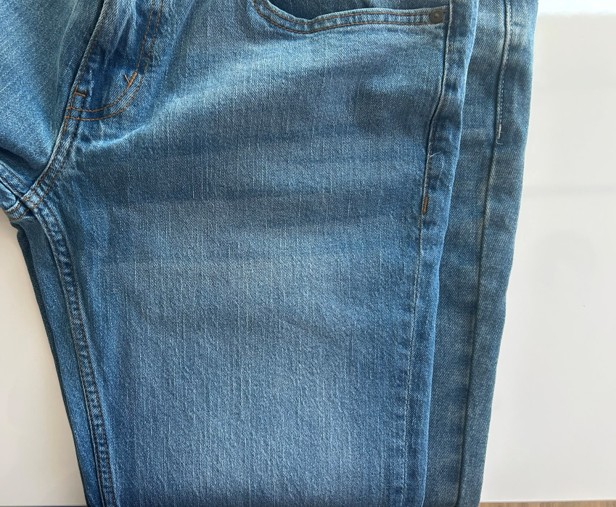
- Women’s jeans: differences of up to 26%, with more than 11 cm between garments labelled size 42.
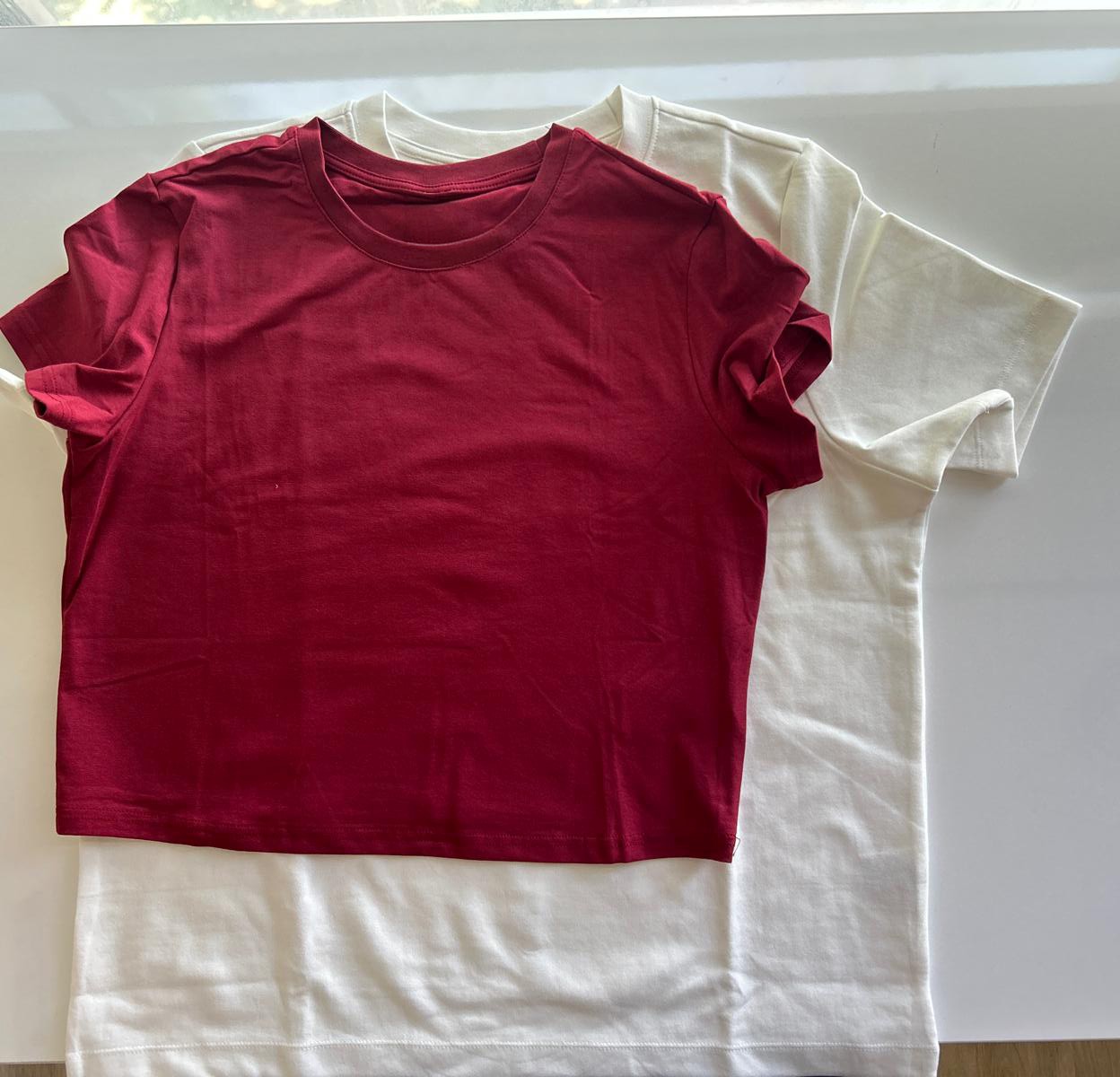
- Women’s T-shirts: differences of up to 25%, equivalent to 12 cm in chest width for size L.
- Men’s shirts: differences of up to 25%, reaching 13 cm in chest width for size L.
- Men’s jeans: differences of up to 10%, equivalent to 3.5 cm in the dimensions compared.
These results show that choosing the same size across different brands does not necessarily guarantee a similar fit.
The study also found that around half of the clothing websites analysed did not provide sufficiently clear sizing information, making it even harder for consumers to make informed purchasing decisions.
Why does the same clothing size vary between brands?
Although clothing sizing standards establish systems based on body dimensions and measurement ranges, they do not define a single universal correspondence between commercial sizes and garment measurements.
Several factors explain why two garments labelled with the same size can fit differently:
- Pattern design: brands use different patterns, proportions and construction criteria.
- Fit and style: slim, regular and oversized garments are designed with different amounts of ease.
- Fabric properties: elasticity and material composition influence how garments adapt to the body.
- Sizing systems: brands may use different measurement references and size equivalences.
Another important finding concerns the information provided by retailers. Some brands publish recommended body measurements, while others provide actual garment dimensions or only general size charts.
This distinction is particularly relevant because body measurements and garment measurements are not interchangeable. The difference between them depends on the garment’s intended fit, design and material properties.
The study therefore highlights the importance of providing consumers with clear, comparable information rather than relying exclusively on conventional size labels.
You might be interested in: 3D body Avatar real use case: 3D human body scanning in sports
The importance of accurate body measurements in clothing sizing
Improving clothing size recommendations requires understanding two essential elements:
- the actual dimensions of a garment
- the body measurements of the person who will wear it.
While garment measurements describe the product, anthropometric data provides objective information about the dimensions and shape of the human body.
This information can help fashion brands and retailers develop more personalized sizing systems and better understand the relationship between body dimensions, garment design and fit.
For e-commerce businesses, where customers cannot physically try on garments before purchasing, access to reliable body measurements is especially valuable.
Digital anthropometry and 3D body scanning technologies offer new possibilities for collecting this information efficiently and incorporating it into digital shopping experiences.
How can 3D Avatar Body contribute to better sizing experiences?
Developed by the Instituto de Biomecánica (IBV), 3D Avatar Body is a mobile body scanning technology that generates a three-dimensional body model using just two photographs taken with a smartphone (one from the front and another from the side).
Powered by AI, the technology provides more than 100 body measurements in less than one minute, without requiring dedicated scanning equipment.
For fashion companies, this technology can support several applications:
- Size recommendation: providing body measurement data that can be combined with garment specifications to develop personalised sizing solutions.
- E-commerce personalisation: helping retailers offer shopping experiences based on individual body dimensions.
- Garment design: supporting the development of clothing based on anthropometric information.
- Digitalisation: enabling businesses to integrate body measurement data into their existing digital platforms and workflows.
Although 3D body scanning does not eliminate differences between brands, it provides an important source of data for developing more informed and personalised approaches to clothing fit.
Towards a more accurate and personalised approach to clothing sizing
The OCU and IBV study illustrates the importance of improving how clothing measurements are defined, communicated and interpreted.
For fashion brands and retailers, addressing this challenge requires better information about garment dimensions and a more accurate understanding of consumers’ bodies.
Combining reliable anthropometric data with garment measurements can support more personalised sizing systems and improve the online shopping experience.
With technologies such as 3D Avatar Body, companies can take another step towards integrating body measurements into their digital processes.
Discover how 3D Avatar Body can help your business implement digital body measurement solutions and improve personalisation.