
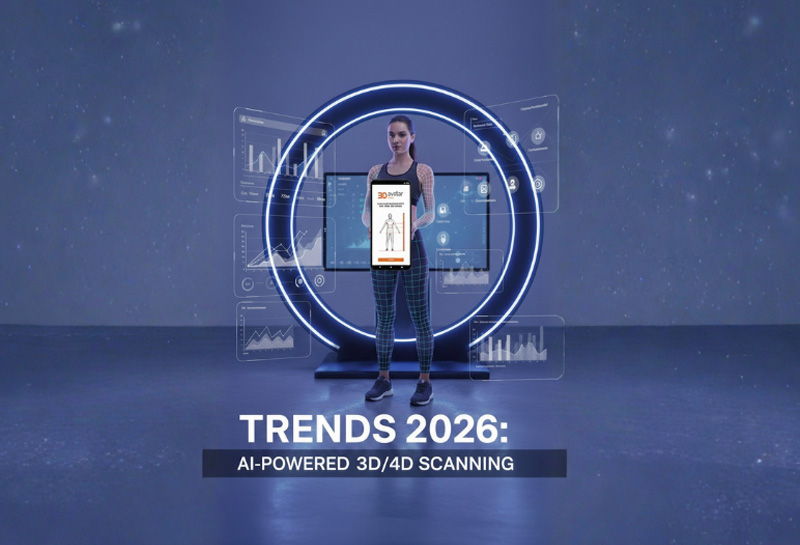
3D and 4D scanning technologies are emerging as key strategic enablers across multiple industries, from retail and footwear to healthcare and advanced manufacturing.
As these technologies evolve from traditional, hardware-intensive systems to AI-driven, cloud-based and mobile solutions, they are fundamentally transforming how companies design products, interact with customers and optimize operational processes.
This article explores the main trends shaping the 3D and 4D scanning market towards 2026 and explains why Avatar solutions — Avatar Body, Avatar Feet and DOMEscan/IBV — are particularly well positioned to address real market needs.
The 3D and 4D scanning market: A growing landscape
Market growth and adoption
The global 3D scanning market continues to grow at a strong pace. Forecasts estimate that the market will reach approximately USD 6.8 billion in the mid-term, with projections exceeding USD 19 billion by 2035, driven by sustained double-digit annual growth rates.
This expansion is fuelled by increasing adoption in sectors such as retail, footwear, healthcare, industrial manufacturing and digital content creation.
Importantly, growth is no longer driven solely by hardware sales, but by software-based solutions that enable scalable, cost-effective and user-friendly 3D data capture.
Key technological shifts
Several structural changes are defining the current market:
- Integration of Artificial Intelligence (AI) for automated measurement extraction and data analysis.
- Cloud-based processing, enabling scalability and seamless integration with enterprise systems.
- Mobile and portable scanning, significantly lowering barriers to adoption.
- Increasing demand for accurate digital representations to support digital twins and immersive experiences.
You may be interested in | Success Case: Safety footwear sizing recommendation based on AI and 3D data
Furthermore, our technologies are based on:
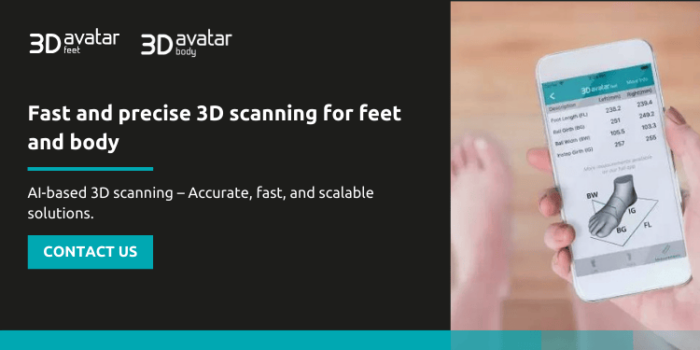
- Personalization: Mobile 3D scanning lets users capture their exact size from a smartphone, enabling brands to offer truly tailored products while democratizing customization.
- Digitalization: Integrating this data into online and offline shopping improves the user experience, matches customers with their ideal size, and reduces returns and related costs.
- Sustainability: Scanning from home reduces unnecessary travel, decreases returns and lowers the carbon footprint. It also eliminates the need for physical scanners in shops and minimises material waste, positioning 3D technology as a key ally for more responsible footwear.
Avatar not only personalises the customer experience, but scanning technology also makes sustainability a reality for brands. By enabling accurate measurements from a smartphone or in-store, overproduction is reduced.
Market needs driving 3D and 4D scanning adoption
Fit, sizing and personalization challenges
One of the most pressing challenges in fashion and footwear — particularly in e-commerce — is the high rate of returns due to poor fit. More than 50% of product returns are linked to sizing and fit issues, representing a major economic and environmental cost for retailers.
Accurate anthropometric data is therefore essential to:
- Reduce returns and logistics costs.
- Improve customer satisfaction and trust.
- Increase conversion rates and brand loyalty.
3D scanning technologies directly address this challenge by providing objective, precise and reusable body and foot measurements.
Efficiency and digital transformation
Companies across sectors are under pressure to digitize processes, reduce manual work and accelerate time-to-market. Traditional measurement methods are often slow, subjective and difficult to scale.
3D and 4D scanning technologies enable:
- Automated generation of accurate anthropometric data.
- Seamless integration with design, manufacturing and recommendation systems.
- A unified online–offline (omnichannel) customer experience.
Key technology trends towards 2026
AI-powered, smartphone-based scanning
One of the most significant trends is the consolidation of smartphone-based 3D scanning solutions.
Thanks to advances in computer vision and AI, users can now generate accurate 3D models using only a mobile device, with cloud-based processing handling the computational complexity.
This approach democratizes access to 3D scanning by eliminating the need for expensive hardware or trained technicians, making large-scale deployment viable in consumer-facing applications.
You may be interested in: Use of mobile 3D scanners for research: A revolution in anthropometry and ergonomics
Emergence of 4D scanning
While most commercial applications currently rely on static 3D models, 4D scanning — which captures shape changes over time — is gaining relevance in areas such as biomechanics, movement analysis, rehabilitation and advanced training systems.
These technologies open the door to dynamic assessments and longitudinal monitoring, especially in healthcare and sports-related applications.
Integration into digital ecosystems
3D and 4D scanning is increasingly embedded within broader digital ecosystems that include AI analytics, cloud platforms, AR/VR experiences and digital twins. This integration transforms raw scans into actionable insights and personalized digital experiences.
Avatar solutions: Technology and market value
The 3D Avatar Body, 3D Avatar Feet, and DomeScan technologies provide valuable anthropometric information that addresses current and emerging market needs.
Benefits from 3D Avatar scanning technology
| Industry challenge | What it means in practice | Direct benefit from 3D AVATAR |
| Lack of reliable anthropometric data | Manual measurements are slow, subjective and hard to scale. |
Accurate, standardised body data to support better sizing, design, analysis and personalisation. |
| Fit and sizing issues causing high returns (fashion & footwear) |
Size uncertainty reduces trust and increases returns in e-commerce. |
Better size recommendation, fewer returns, higher conversion and improved customer experience. |
| Limited scalability due to hardware-heavy solutions |
Traditional systems require expensive equipment and expert operators. |
Mobile and cloud-based deployment enables fast roll-out, lower costs and mass adoption. |
| Low efficiency and poor integration with digital systems |
Manual processes and disconnected tools slow down operations. |
Easy integration with e-commerce, ERP, PLM and AI systems, enabling automation and faster workflows. |
| Sustainability and data governance pressure | Returns, waste and sensitive body data raise environmental and compliance concerns. |
Reduced waste and emissions, plus solutions aligned with privacy, security and data governance requirements. |
Key application sectors
Fashion and retail
Avatar solutions enable personalized sizing, virtual fitting experiences and improved customer confidence, helping brands reduce returns and differentiate their offering.
The Regna use case clearly demonstrates this impact. By integrating Avatar’s mobile 3D body scanning into its e-commerce and production workflow, the brand:
- Reduced measurement time by 95%,
- Cut return rates by 35%,
- Increased average order value by 22%.
Beyond better fit and customer confidence, the technology also delivered operational and sustainability gains, including a 48% reduction in remakes and 27% less material waste, proving how digital body scanning helps fashion brands sell more, waste less, and scale personalized experiences globally.
Find all the information about Regna in the following article: 3D body Avatar real use case: 3D human body scanning in sports
Footwear and biomechanics
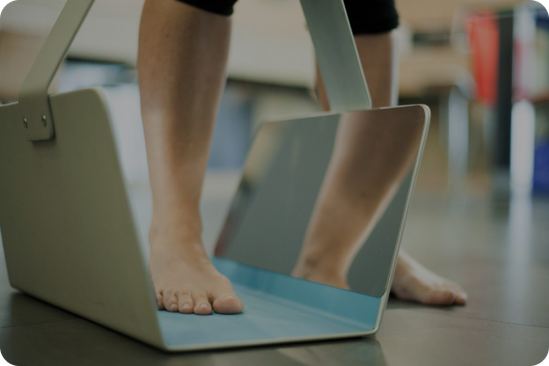
Precise foot scanning supports better size allocation, improved comfort and data-driven footwear design, as well as applications in orthotics and performance analysis.
Don’t miss our articles on: Success story: Enrico Cuini and 3D Avatar are revolutionizing luxury footwear & 3D-printed custom insoles for parkrun runners – DOMEscan/IBV and ZOLES
Healthcare and wellness
Accurate anthropometric data is valuable for posture analysis, rehabilitation monitoring, physiotherapy and personalized health programs.
At 3DBody.Tech 2025, IBV presented the FITME project, which combines 3D Avatar Body scanning with biomedical data to move beyond BMI and enable more precise and personalized obesity assessment.
Using radiation-free smartphone-based 3D scanning, clinicians can obtain reliable, repeatable body measurements, improving patient experience and supporting digital, data-driven healthcare models focused on real body diversity and risk.
Fitness, training and digital experiences
3D avatars can be integrated into fitness platforms, gaming, virtual training and immersive digital environments, enhancing realism and personalization.
Research & education
Avatar solutions are becoming a powerful tool not only for research, but also for teaching and training.
Universities and research centers can use mobile 3D scanning to capture real human body data, enabling students to work with accurate, real-world anthropometry instead of theoretical models.
From biomechanics and ergonomics to fashion design, health sciences, and engineering, Avatar provides a hands-on way to explore body variability, measurement, and digital twins.
This makes learning more applied, more visual, and closer to the technologies already transforming industry and healthcare.
Challenges and opportunities
Challenges
- Integration with existing IT and data ecosystems.
- Data privacy and regulatory compliance (e.g. GDPR).
- User education and adoption at scale.
- Continuous technological evolution: 3D Avatar Feet and Body solutions must be updated to include new functionalities and support different use cases.
- Ensuring correct user adoption of mobile scanning tools while maintaining high-quality, accurate measurement data.
Opportunities
3D Avatar Feet
- Development of an automatic shoe size assignment tool (adult and child) for e-commerce.
- User perspective: faster and easier selection of the right product.
- Business perspective: reduced returns, lower material waste, and stronger brand positioning.
3D Avatar Body
- Implementation of new features to expand applications across industries.
- Future possibilities: skeleton integration for avatar movement and animation; AI-based image capture improvements to remove obstructions and guide posture; new pose models for specialized use cases (e.g., bike fitting).
- User perspective: easier and more precise product/service selection.
- Business perspective: fewer returns, optimized processes, enhanced customer experience, and reduced resource waste.
Conclusion
3D and 4D scanning technologies are transitioning from niche tools to core enablers of personalization and operational efficiency.
As AI, cloud computing and mobile platforms mature, their adoption will accelerate across consumer and professional markets.
Avatar Body, Avatar Feet and DOMEscan/IBV are strongly aligned with these trends, offering accessible, scalable and high-precision solutions that respond directly to real market needs.
Looking towards 2026, companies that embrace these technologies will be better positioned to compete through personalization, efficiency and innovation.